
01
Site network
The WLAN or private AP the floor already runs. Fine until airtime, interference, or a switch event takes it away.
United States · Florida
Communications silicon · industrial links
Aether-Braid is TUCE’s program for compact digital functions that sit beside a radio or a packet link. The public goal is simple: give industrial equipment a redundant digital path, then prove the core in silicon before anyone talks production.
Redundancy
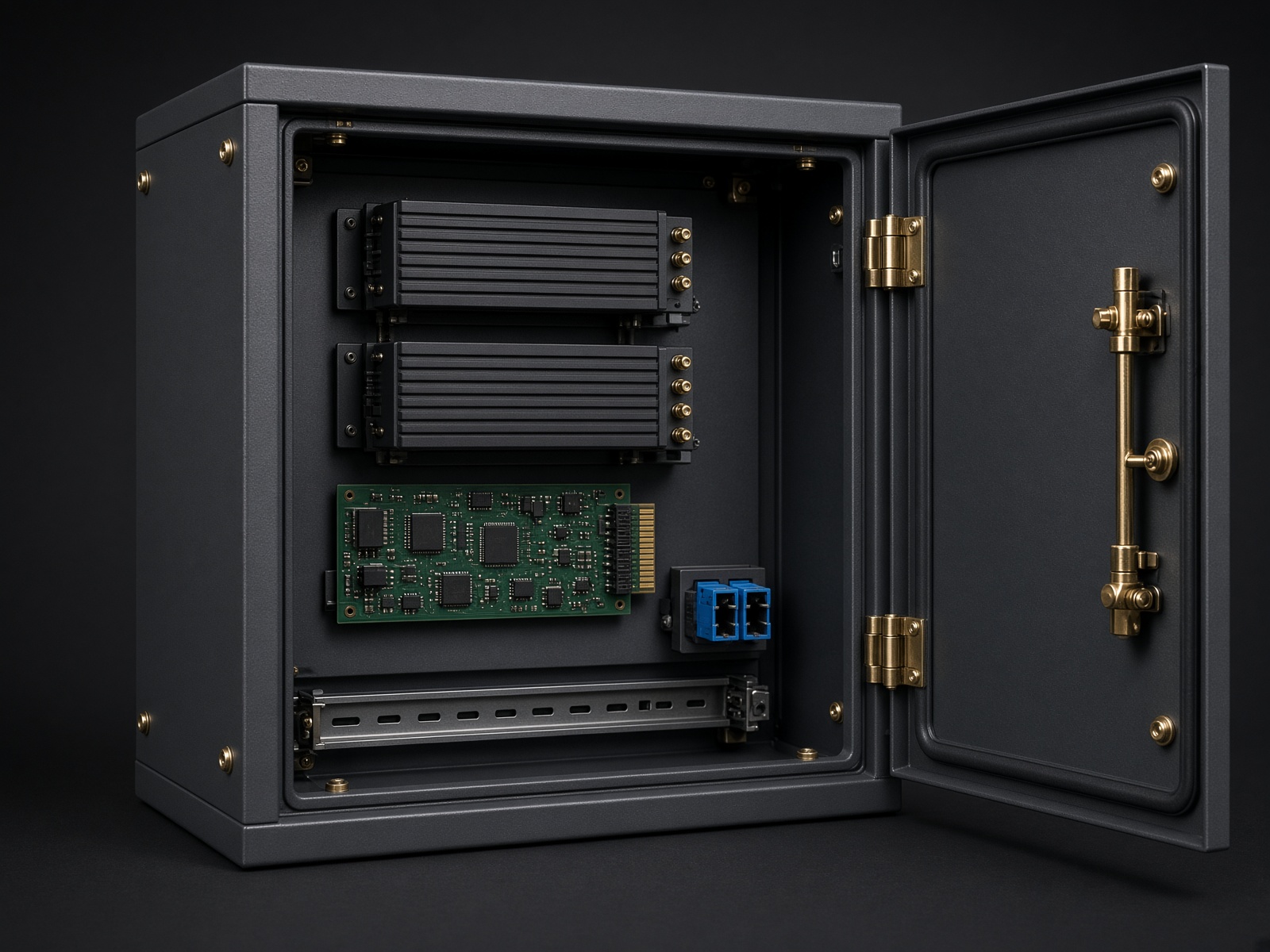
Most sites already mix a plant WLAN, a wired control bus, and a vendor radio. Aether-Braid is not a replacement for those. It is a small digital core that can keep a link useful when one of them drops packets, saturates, or is taken down for maintenance.
01
The WLAN or private AP the floor already runs. Fine until airtime, interference, or a switch event takes it away.
02
The bus or Ethernet drop that is reliable in a cabinet and fragile the moment the asset moves.
03
On-chip arithmetic, coding, and a host interface so a controller still has a digital path when the other two are unhealthy.
What it is
Publicly, Aether-Braid is digital IP and evaluation firmware. The blocks are the unglamorous ones a radio still needs: fixed-point arithmetic, forward error control, and a host bus. We do not publish waveforms, keys, layouts, or customer names.
The work is aimed at industrial Internet of Things links — conveyors, yards, mobile assets, and cabinets that cannot treat a single radio as the whole story. That is a product direction, not a claim that field radios are shipping today.
How we prove it
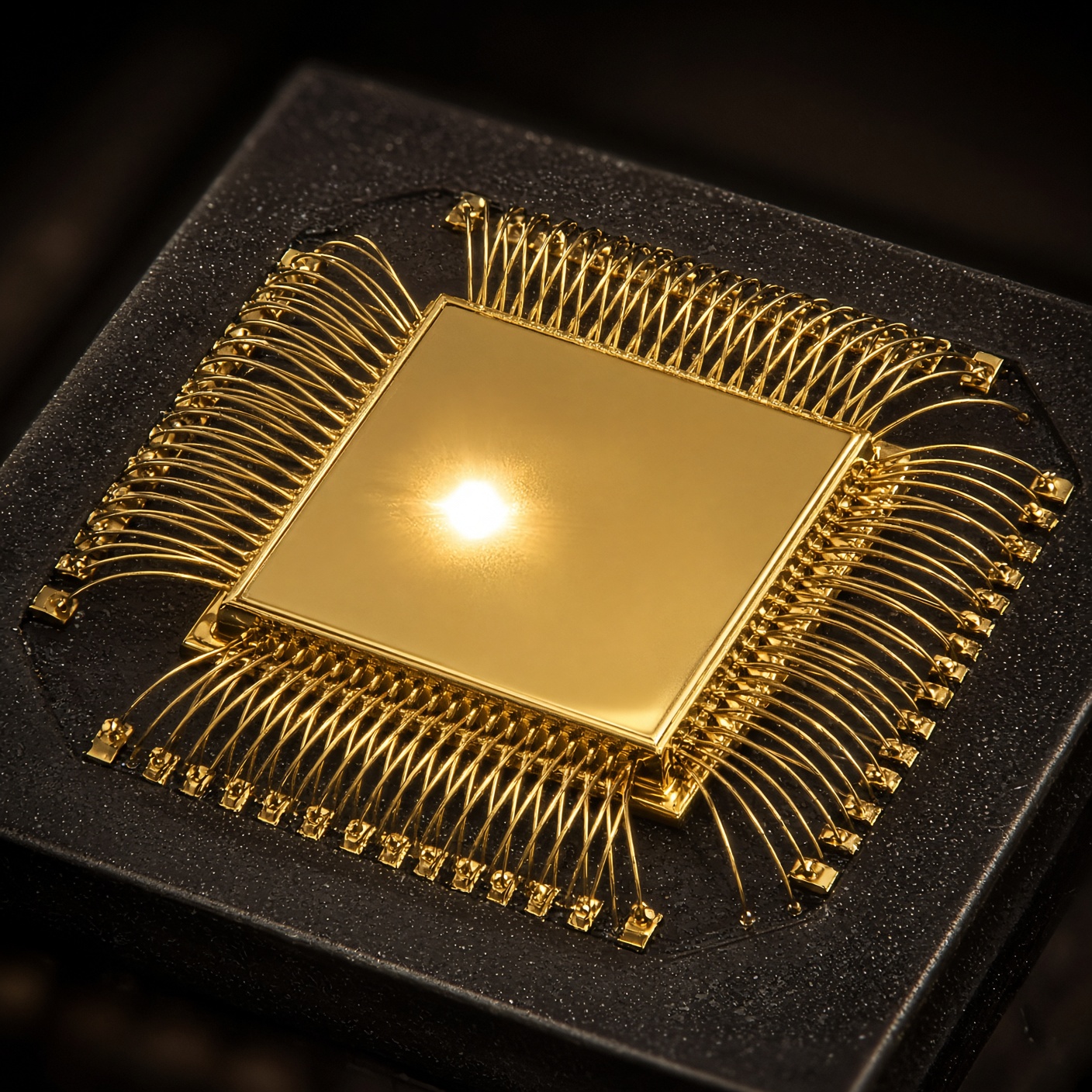
Evaluation happens on ordinary lab hardware and on open-process shuttle silicon when a wafer slot is the right tool. A current prototype vehicle is SkyWater 130 nm on a multi-project wafer. That is one measurement path. It is not the definition of the program, and it is not a production announcement.